

Most businesses track the obvious signals of a struggling office. Complaints about noise. Requests for more meeting rooms. The occasional frustrated comment in an engagement survey. What almost never gets tracked, and what is often far more revealing, is a quieter, more subtle pattern happening among a business’s strongest performers. These are the employees with the most options, the ones who could leave tomorrow and have another offer within weeks, and they are rarely the ones complaining loudly about the office. Instead, they simply adjust their behaviour. They come in less often. They schedule their in office days around the quietest possible windows. They quietly request to work from home on days when focused work matters most. None of this shows up as a formal complaint, and none of it necessarily shows up in a standard engagement survey, yet it represents one of the clearest signals available that an office is failing the very people a business can least afford to lose. Why Your Best People Are the Ones Who Notice First There is a specific reason this pattern tends to show up among top performers before it becomes visible anywhere else in the organisation. Strong performers are frequently the ones doing the most cognitively demanding work, the kind that genuinely requires sustained focus, and they are also, by definition, the employees with the most alternative options available to them in the job market. This combination means they are both the most sensitive to a poorly functioning office and the least obligated to tolerate it. An average performer with fewer external options may continue coming into a noisy, poorly designed office simply because leaving feels riskier than staying. A genuinely strong performer, acutely aware of their own market value, faces no such constraint. When the office stops serving their work effectively, they do not need to complain about it. They simply start optimising around it, quietly reducing their office presence to whatever the business will tolerate, and in many cases, beginning to seriously consider whether a fully remote role elsewhere might simply remove the friction altogether. The Early Signals Businesses Usually Miss Because this pattern rarely announces itself through formal complaints, it requires a business to actively look for it rather than wait for it to surface on its own. One of the clearest early signals is a quiet divergence in office attendance between a business’s strongest and weaker performers, where top talent consistently shows lower attendance than the wider team, despite facing no formal restriction on how often they are expected in. Another signal is a pattern of top performers requesting to work from home specifically on days involving deep, focused work, reserving their office time almost exclusively for meetings and collaborative sessions, which suggests the office itself is being treated as unsuitable for concentrated effort. A further signal, often the most serious, is when strong performers begin asking pointed questions during exit interviews or informal conversations about whether the role could realistically be done remotely, a question that rarely gets asked by someone who finds genuine value in coming into the office. None of these signals are dramatic on their own, but together they paint a picture that is easy to miss if a business is only monitoring overall attendance figures or waiting for formal, explicit complaints. Why This Matters More Than General Dissatisfaction It would be reasonable to ask why this particular pattern deserves more attention than general office dissatisfaction across the wider workforce, and the answer comes down to the asymmetry in what is actually at risk. Losing an average performer to a competitor is a genuine cost, but it is a cost most businesses can absorb and recover from relatively quickly. Losing a genuinely exceptional performer, particularly one in a role where strong talent is scarce and expensive to replace, represents a considerably larger and more disruptive loss, one that can affect team output, client relationships, and institutional knowledge in ways that take far longer to recover from than a standard hire would suggest. This is precisely why the quiet, early signals among top performers deserve closer attention than they typically receive. By the time dissatisfaction among this group becomes visible through a resignation, the business has generally already lost the opportunity to address the underlying cause before it resulted in a costly departure. What Is Actually Driving This Pattern The specific office conditions driving this quiet attrition among top performers tend to be remarkably consistent across different businesses and industries. Persistent noise and a lack of genuine quiet space for focused work rank among the most common drivers, since this directly undermines the kind of deep, concentrated effort that strong performers are frequently responsible for delivering. A shortage of meeting rooms, forcing important conversations into corridors or video calls even when both parties are physically in the same building, creates ongoing friction that experienced, time conscious employees notice and resent more acutely than less senior staff might. A workplace that feels generically functional rather than genuinely well designed, offering no meaningful advantage over a comfortable home office, removes much of the incentive for attending in person at all, particularly for employees whose work does not inherently require physical collaboration with colleagues. In each of these cases, the underlying issue is rarely that the office is unusable. It is that the office offers no compelling reason to prefer it over working from home, and for employees who could work from almost anywhere, that absence of a compelling reason is often enough to tip the balance. Why Standard Engagement Surveys Miss This Many businesses assume their regular employee engagement or satisfaction surveys would catch this kind of pattern if it were genuinely occurring, yet standard surveys are often poorly designed to surface it. Generic questions asking whether an employee is satisfied with the office tend to produce generic, moderately positive answers, since most employees are reluctant to flag a dissatisfaction that feels difficult to quantify or justify in a structured survey format. The pattern described

Why Smart Companies Are Quietly Downsizing Their Offices, and Winning
For decades, the trajectory of a successful business and the trajectory of its office size were assumed to move in the same direction. Growth meant more staff, more staff meant more desks, and more desks meant a bigger footprint. A business that moved into a smaller space was almost automatically read as a business in decline, cutting costs because it had no other choice, scaling back ambition along with square metres. This assumption is now badly out of date, and a growing number of genuinely successful, well run businesses are quietly proving it wrong. They are choosing smaller offices, not because they have to, but because a smaller, more deliberately designed space often serves them considerably better than the larger footprint they previously occupied. This is not retreat. It is a calculated, confident decision, and the businesses making it are generally not the ones struggling. They are often the ones growing fastest, precisely because they have stopped treating office size as a proxy for success and started treating it as a cost that needs to justify itself like any other. Why Bigger Stopped Meaning Better The assumption that growth requires more space made sense in an era when nearly every employee was expected in the office five days a week, when video conferencing was clunky and rarely used, and when a company’s physical footprint was one of the few visible signals of its scale to clients, investors, and prospective employees. Hybrid working has fundamentally broken this logic. When a meaningful proportion of a workforce is not in the office on any given day, maintaining a footprint sized for full, simultaneous attendance means carrying significant unused capacity for most of the working week. This is not a hypothetical inefficiency. It represents real, ongoing rental and operating cost tied to desks, meeting rooms, and floor space that sit empty far more often than they are used. Businesses that have properly examined their actual occupancy data, rather than relying on how full the office feels on its busiest days, are frequently shocked to discover just how much of their footprint goes genuinely unused across an average week, and this realisation is precisely what is driving the quiet downsizing trend now underway. The Businesses Leading This Shift The businesses choosing to downsize deliberately are rarely the struggling ones trying to cut costs out of necessity. They tend to be confident, often fast growing organisations that have simply done the maths properly and concluded that a smaller, better designed space delivers more genuine value than a larger, underused one. Technology companies with highly flexible or fully hybrid working models have been among the earliest and most visible examples, often moving from large, traditional footprints into considerably smaller, more carefully curated spaces that prioritise quality over quantity. Professional services firms have followed a similar pattern, recognising that client meetings, the primary reason many client facing teams still need a physical presence, can be accommodated through a smaller number of excellent, well designed spaces rather than acres of permanently underused desking. What unites these businesses is not that they are retreating from ambition, but that they have recognised ambition and square metreage are no longer the same thing, and that a smaller footprint, freed from the cost of maintaining unused capacity, allows more budget to be redirected toward the things that genuinely matter, better technology, stronger talent, or simply healthier margins. What Downsizing Actually Looks Like Done Well It is worth being precise about what intelligent downsizing actually involves, since done poorly, reducing office size simply recreates the same inefficiencies in a smaller space, cramming the same number of desks and the same rigid layout into a tighter footprint and calling it a cost saving. Done well, downsizing is a genuine redesign exercise, not merely a reduction. It typically involves moving away from fixed, one desk per employee allocation toward a more flexible desking ratio based on real average attendance rather than peak capacity. It involves rethinking meeting room quantity and size based on actual booking data, rather than the number of meeting rooms that happened to exist in the previous, larger office. It often involves investing more, not less, in the quality of the remaining space, since a smaller footprint that is genuinely excellent tends to serve a business and its culture far better than a larger one that is merely adequate. The businesses getting this right are not simply shrinking their old office. They are rethinking what the office needs to do from first principles, and then sizing and designing a new space specifically to deliver that. The Financial Case Is Hard to Ignore Set against the broader emotional discomfort some businesses still feel about reducing their footprint, the financial case for intelligent downsizing is genuinely compelling once properly examined. Rent and associated operating costs, including utilities, cleaning, and maintenance, typically scale directly with square metreage, meaning a meaningful reduction in footprint translates into a meaningful, ongoing reduction in one of a business’s largest fixed overheads. For many businesses, particularly those operating in competitive commercial property markets, this saving is substantial enough to materially affect overall margins, freeing up capital that can be redirected toward growth initiatives, talent, or simply strengthening the business’s financial resilience. Importantly, this saving is recurring rather than one off, compounding year after year for as long as the business maintains the smaller, more efficient footprint, which makes the initial investment in redesigning and reconfiguring the space for this purpose pay for itself considerably faster than many businesses initially expect. Addressing the Fear Behind the Hesitation Despite the compelling financial logic, many businesses remain hesitant to downsize, often driven by a genuine but largely outdated concern about how a smaller office will be perceived by clients, employees, or competitors. This concern deserves to be taken seriously rather than dismissed, since perception does matter, but it is worth examining honestly whether this fear reflects current reality or an older assumption that no longer holds. Clients visiting a business today are far

The Open Office Is Dead. Nobody Told the Architects.
Walk into almost any newly built or newly fitted out office today, and there is a reasonable chance you will still find the same formula that has dominated commercial design for the better part of two decades. Long rows of identical desks. A handful of glass fronted meeting rooms along the perimeter. A collaboration zone somewhere near the kitchen, added almost as an afterthought. This formula has a name, open plan, and for years it was treated as the default answer to almost every workplace brief, regardless of the business asking for it. The uncomfortable truth, one that employees have been quietly signalling for years through declining in office attendance, mounting complaints about noise, and a growing preference for working from home, is that open plan has not delivered on its original promise for a long time. It is still being specified, still being built, and still being presented as modern, forward thinking design. It is also, in practical terms, already dead. Somebody simply forgot to tell the people still drawing it onto floor plans. The Promise Open Plan Was Supposed to Deliver To understand why open plan is failing, it helps to remember what it was actually supposed to achieve in the first place. The idea, when it first gained serious momentum, was genuinely compelling. Remove the walls, remove the hierarchy implied by private offices, and collaboration would flow naturally across a flat, connected floor. Ideas would spread faster. Teams would work more fluidly across departments. Junior staff would sit beside senior leaders, breaking down the kind of rigid corporate distance that many businesses were actively trying to move away from. On paper, and in the early case studies that got cited endlessly at design conferences, this all sounded entirely reasonable. The problem was never the intention behind open plan. The problem was what actually happened once thousands of businesses implemented a version of it that prioritised desk density and cost savings over the genuine collaborative outcomes it was originally meant to produce. What Actually Happened in Practice In practice, open plan quietly became something quite different from its original pitch. For many businesses, it turned into a convenient justification for fitting more people into less space, since removing walls and private offices genuinely does increase desk density and reduce the cost per employee of a given footprint. The collaborative benefits that were meant to justify this shift were real in theory, but they came bundled with a cost that was rarely acknowledged honestly during the design process. Constant ambient noise. A complete absence of visual or acoustic privacy. Difficulty finding a quiet space for a confidential call or genuinely focused work. Research into workplace productivity has consistently shown that these costs are not minor inconveniences, they measurably reduce concentration, increase stress, and in some studies, even reduce the face to face interaction open plan was supposed to encourage, since employees facing constant noise and interruption often retreat into headphones and digital communication specifically to create the privacy the physical space failed to provide. Why Businesses Kept Building It Anyway Given how consistently the downsides of open plan have been documented, it is worth asking why so many businesses, and so many architects and designers, continued specifying it as the default approach for years after the evidence against it became hard to ignore. Part of the answer is simple inertia. Open plan became the industry standard, the thing everyone expected a modern office to look like, and departing from that expectation required a business to justify a different choice rather than the other way around. Part of the answer is cost, since open plan genuinely does allow more people into a smaller footprint, and that financial logic is difficult to argue against on a spreadsheet, even when the hidden costs of lost productivity and employee dissatisfaction never appear on that same spreadsheet. Part of the answer is simply that open plan photographs well. It looks clean, modern, and impressive in a design rendering or a set of professional photographs, which made it an easy sell during the pitch stage of a project, long before anyone actually had to sit and work in the finished space for eight hours a day. The Shift That Is Actually Happening What is genuinely replacing open plan is not a return to the old world of private offices and closed doors, which would simply swap one set of problems for another. The shift underway is toward something more deliberate, often described as activity based or zoned design, where an office is built around the understanding that people need meaningfully different environments depending on what they are doing at any given moment. This means dedicated, acoustically treated quiet zones for focused individual work, genuinely separated from open collaborative areas rather than placed a few metres away with no real buffer between them. It means a wider variety of space types within the same footprint, phone booths for private calls, small huddle rooms for two or three people, larger collaborative zones for genuine group work, and quiet, enclosed areas that function almost like a library reading room within the office. Crucially, this is not simply open plan with a few add ons bolted onto the edges. It is a fundamentally different starting assumption, that different work genuinely needs different space, rather than assuming one flexible open floor can reasonably serve every need at once. Why This Shift Is Harder Than It Sounds It would be easy to assume this transition is simply a matter of adding a few more enclosed rooms to an otherwise familiar open plan layout, but genuinely effective zoned design requires considerably more careful planning than that. It requires understanding, often through real occupancy data rather than assumption, how different teams within a specific business actually work, since the right mix of space types varies significantly between a business built around deep, focused individual work and one built around constant collaborative problem solving. It requires careful attention to circulation and acoustic separation,

How Do You Know If Your Office Is Actually Working?
A new office launches with plenty of attention. There is a walkthrough, some photographs, perhaps an internal announcement celebrating the investment, and for the first few weeks everyone forms an opinion about the space simply by being in it. What almost never happens, once that initial period passes, is any structured attempt to actually evaluate whether the office is doing what it was meant to do. Businesses spend significant time and money deciding what kind of office to build, yet remarkably little time afterward checking whether that decision actually paid off. This gap matters more than it might seem, because a business that never properly evaluates its workplace has no reliable way of knowing whether to repeat the same approach next time, adjust it, or fundamentally rethink it. Without this kind of evaluation, the same assumptions and habits tend to carry forward into every future workplace decision, regardless of whether they actually worked the first time around. Why Evaluation Gets Skipped There are understandable reasons this step gets overlooked so consistently. Once an office project is complete, attention naturally shifts toward whatever comes next, and there is rarely a dedicated budget or clear owner responsible for measuring outcomes after the fact. Evaluation also feels less urgent than the original decision, since the space already exists and changing course after the fact can feel disruptive or expensive, which makes it tempting to simply accept whatever the outcome happens to be rather than actively investigating it. There is also a subtler, more human reason evaluation gets avoided. The people who championed a particular workplace direction are often reluctant to critically examine whether it actually worked, since doing so risks surfacing uncomfortable conclusions about a decision they personally advocated for. None of these reasons are unreasonable on their own, but together they explain why so many businesses continue operating in spaces that are quietly underperforming, without ever gathering the evidence that would reveal this clearly. Moving Beyond Gut Feel In the absence of proper evaluation, most businesses fall back on gut feel to judge whether their office is working, and gut feel is a notoriously unreliable measure for this particular question. A leader who works from a private office and attends mostly scheduled meetings may have an entirely different impression of the workplace than an employee who sits in a noisy open area and struggles to find a quiet room when needed. Gut feel is also heavily influenced by recency, meaning a single frustrating week filled with meeting room shortages can shape someone’s overall impression of the office far more than months of the space functioning perfectly well. Relying on impressions gathered this way, rather than genuine evidence, means a business’s understanding of its own workplace performance is often shaped by whoever happens to be vocal about their experience, rather than reflecting the reality experienced across the organisation as a whole. What Genuine Workplace Evaluation Looks Like A more rigorous approach to this question starts by returning to whatever goals were originally set for the workplace and testing the space directly against them, rather than relying on general satisfaction or impression. If a business set out to improve collaboration between specific teams, genuine evaluation means examining whether that collaboration is actually happening more frequently or effectively than before, rather than simply noting that the office now has more open, social space. If a business aimed to reduce real estate costs through a more efficient layout, evaluation means comparing actual costs and occupancy data before and after the change, rather than assuming efficiency improved because the space looks more compact. If the goal involved supporting recruitment or retention, evaluation means examining whether measurable outcomes in those areas have genuinely shifted, rather than assuming a nicer looking office must automatically be helping. This kind of evaluation requires discipline, since it demands returning to specific, sometimes uncomfortable questions rather than accepting a vague, generally positive impression as sufficient proof that a workplace investment succeeded. The Role of Occupancy and Usage Data One of the most valuable tools available for this kind of evaluation is genuine occupancy and usage data, gathered over a meaningful period rather than a single snapshot. This data reveals patterns that are almost impossible to detect through casual observation alone, showing precisely which areas of the office are consistently well used, which are rarely used at all, and where friction points such as meeting room shortages or overcrowded collaboration zones are genuinely occurring rather than simply being perceived. Businesses that gather this kind of data are often surprised by how different the reality is from their assumptions, discovering that a space believed to be constantly busy is actually used only moderately, or that a quiet corner assumed to be underused is in fact one of the most consistently occupied parts of the office. This evidence gives a business something far more useful than opinion when deciding whether the current workplace genuinely needs adjustment, and if so, precisely where that adjustment should be focused. Listening to Employees Properly Alongside occupancy data, structured employee feedback plays an important role in genuine workplace evaluation, provided it is gathered properly rather than informally through occasional complaints or corridor conversations. A well designed feedback process asks specific, targeted questions related directly to the original goals of the workplace project, rather than a generic request for opinions about the office. This might involve asking whether employees feel they have adequate access to quiet space when they need it, whether collaboration between specific teams has genuinely become easier, or whether the office supports the particular kind of work they do on a daily basis. Structured feedback gathered this way tends to surface far more useful and specific insight than informal complaints, which are often driven by whoever feels strongly enough to raise an issue rather than reflecting a representative view across the wider organisation. Evaluation as an Ongoing Practice, not a One-Time Check It is worth recognising that workplace evaluation should not be treated as a single exercise conducted

What Is Your Office Actually Supposed to Achieve?
Ask most business leaders what their office is for, and the initial answer tends to be surprisingly vague. It is where people work. It is where the team comes together. It is where clients are met. These answers are not wrong, but they are also not specific enough to actually guide a meaningful workplace decision. A business that has not clearly defined what its office is genuinely meant to achieve has no reliable way to judge whether a proposed layout, design direction, or investment is actually the right one, because there is no clear standard to measure it against. This is one of the most overlooked questions in workplace planning, precisely because it seems so obvious that most businesses assume they already know the answer, without ever having articulated it clearly enough to actually use it as a decision making tool. Why This Question Is Harder Than It Sounds The difficulty with this question is that an office is rarely meant to achieve just one thing. It is simultaneously expected to support focused individual work, enable collaboration between teams, project a certain image to clients and visitors, help attract and retain talent, and often serve as a physical expression of company culture and values. Each of these functions can pull a workplace design in a different direction, and without a clear sense of priority between them, a business risks ending up with a space that tries to serve every purpose equally and, as a result, serves none of them particularly well. A business that genuinely understands what its office needs to achieve is able to make deliberate trade offs when these functions compete for the same square metres or budget, rather than making those trade offs unconsciously through a series of disconnected decisions made at different points throughout a project. Starting With Business Objectives, Not Design Preferences A useful way to approach this question is to start entirely outside the realm of design and instead focus on core business objectives. What is the business actually trying to achieve over the next few years, and how, specifically, might the physical workplace support or hinder that goal. A business focused on aggressive growth and talent acquisition might need its office to function as a genuine competitive advantage in recruitment, meaning the space needs to actively help convince candidates to choose this business over others making similar offers. A business focused on strengthening client relationships and winning larger accounts might need its office to project credibility and stability in a way that reassures cautious, risk averse clients during the sales process. A business focused on operational efficiency and cost control might need its office to prioritise practical functionality over any kind of aspirational statement. None of these objectives are inherently more valid than the others, but they point toward meaningfully different workplace priorities, which is exactly why starting with business objectives, rather than jumping straight into design preferences, produces a far more useful answer to the original question. Translating Objectives into Specific Workplace Goals Once a business has clarified its underlying objectives, the next step is translating those objectives into specific, workable workplace goals that can actually inform design and layout decisions. A broad ambition like we want our office to support collaboration is far too vague to guide meaningful decisions on its own. A more useful version of that goal specifies exactly what kind of collaboration matters most, between which teams, and what outcome that collaboration is meant to produce, whether that is faster problem solving, stronger cross functional relationships, or more effective knowledge sharing across departments that otherwise rarely interact. Similarly, a goal like we want our office to reflect our brand becomes far more actionable once it is translated into specific questions about what impression the business wants a client or candidate to form within the first few minutes of walking through the door, and what particular qualities, whether that is innovation, stability, warmth, or precision, the space needs to communicate to support that impression effectively. Why Vague Goals Lead to Compromised Outcomes Workplace projects that proceed without this kind of clarity tend to accumulate compromises throughout the process, often without anyone fully realising it is happening. Without a clear standard to measure decisions against, individual choices about layout, furniture, and finishes end up being made on a case by case basis, frequently influenced by whoever happens to be most vocal in a particular meeting, or by what looks appealing in a moment rather than what genuinely serves the business’s actual priorities. Over the course of a project, these small, disconnected compromises accumulate into a final result that reflects no single clear vision, but rather an uneasy blend of competing preferences that were never properly reconciled. This is one of the most common reasons businesses end up dissatisfied with a workplace project even when every individual decision seemed reasonable at the time it was made, because the absence of a clear, shared understanding of what the office was meant to achieve meant there was never a consistent standard guiding the many smaller decisions along the way. Using Clear Goals to Evaluate Design Decisions Once a business has established specific, well defined goals for its workplace, those goals become an genuinely practical tool for evaluating every subsequent decision throughout the project. A proposed layout can be tested against the question of whether it genuinely supports the specific type of collaboration the business identified as a priority, rather than simply whether it looks open and modern. A proposed reception design can be evaluated against whether it communicates the particular qualities the business wants clients to associate with it, rather than whether it matches a general sense of what a good reception area should look like. This approach transforms workplace decision making from a largely subjective process, driven by taste and instinct, into a considerably more objective one, where decisions can be justified by reference back to a clearly agreed set of goals rather than defended purely on the basis of personal
Your CEO Wants Collaboration. Your Employees Want Quiet. Who Wins?
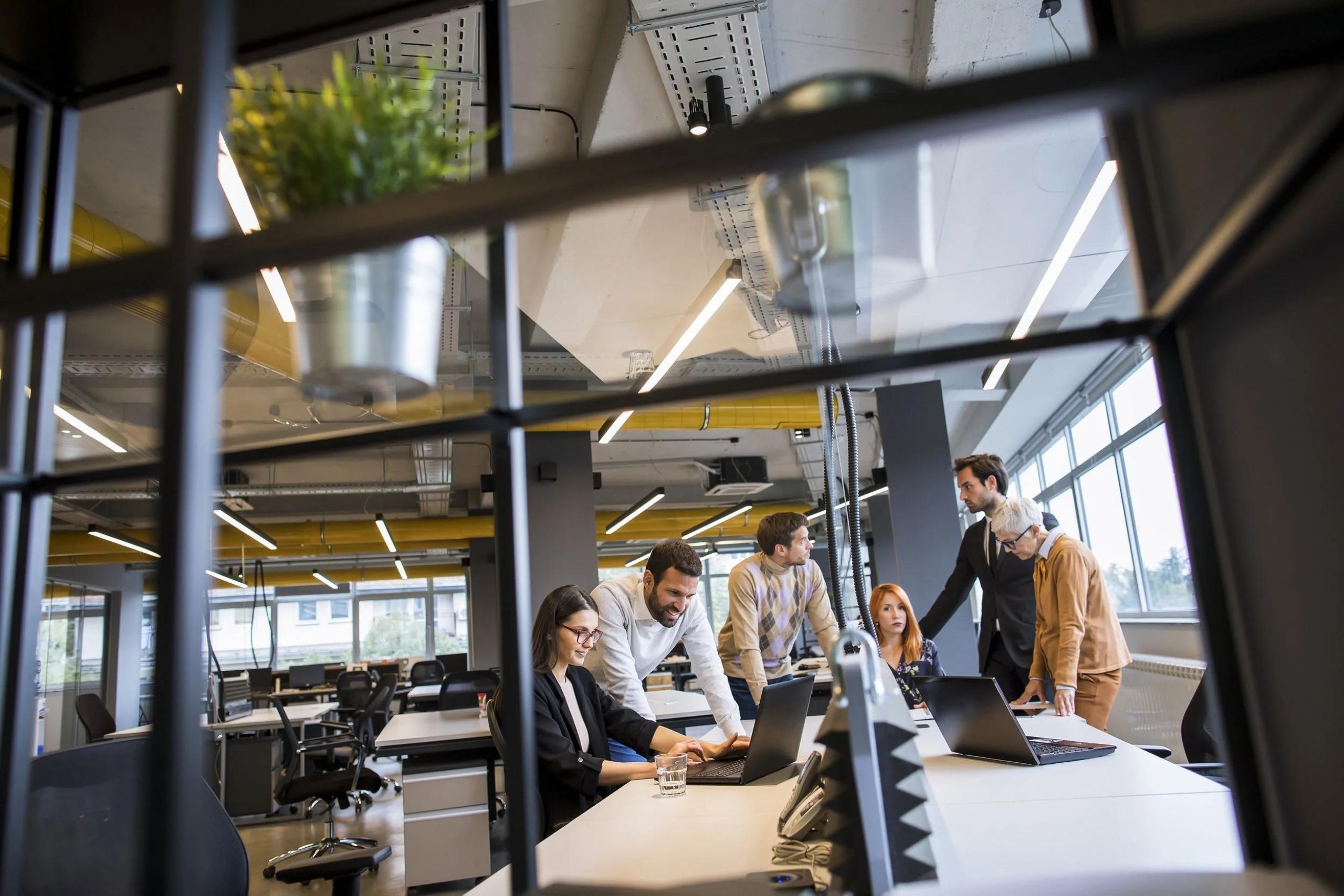
It is one of the most common tensions in workplace planning, and it rarely gets discussed openly enough during the design process. Leadership, often driven by a genuine belief that in person collaboration drives innovation, culture, and business results, pushes for an open, social, highly connected office. Employees, meanwhile, frequently report that what they actually want from the office is the ability to concentrate without constant interruption, particularly given how easily focused work can be done from home without the noise and movement of a busy shared space. Both sides of this tension are legitimate. Leadership is right that meaningful collaboration matters and genuinely benefits from physical proximity in ways that video calls struggle to replicate. Employees are equally right that constant noise and interruption make deep, focused work genuinely difficult, and that an office offering no advantage over working from home gives them little reason to make the commute at all. The question of who wins this tension is the wrong question to ask, because a well designed office does not force a choice between the two. It is built to support both. Why This Tension Keeps Coming Up This conflict tends to resurface in almost every workplace project because it reflects a genuine, unresolved disagreement about what the office is actually for. Leadership frequently views the office primarily through the lens of culture and collaboration, since these are the outcomes most visible and most valued from a strategic vantage point. Employees, who experience the office as the place where their actual daily work gets done, are naturally more attuned to how well the space supports their ability to complete that work effectively. Neither perspective is wrong, but when a workplace project proceeds without deliberately reconciling these two views, the result tends to reflect whichever voice was loudest or most senior during the design process, rather than a genuinely balanced outcome. This is precisely why the tension so often resurfaces after a new office has already opened, once employees discover in practice that a beautifully collaborative space has quietly made it much harder for them to get focused work done. The Business Case for Collaboration Is Real It is worth taking leadership’s instinct toward collaboration seriously, because the underlying business case is genuinely sound. Physical proximity does tend to increase the frequency and quality of informal interaction, the kind of unplanned conversation that often leads to problem solving, idea generation, and relationship building in ways that scheduled video calls rarely replicate. For businesses relying on cross functional teamwork, client relationships, or a strong sense of shared culture, particularly in a hybrid environment where in person time is limited and therefore more valuable, prioritising space that genuinely enables interaction is a reasonable and often necessary strategic choice. Dismissing this instinct as simply an outdated preference for open plan design misses the genuine strategic reasoning behind it, and businesses that ignore this reasoning entirely in favour of a purely quiet, cellular office risk losing much of the value that bringing people together in person is actually meant to provide. The Business Case for Focus Is Equally Real At the same time, the employee argument for quiet, focused space deserves to be taken just as seriously, because a meaningful proportion of most people’s work genuinely requires sustained concentration that a noisy, highly social environment actively undermines. Research into workplace productivity consistently shows that frequent interruption and background noise measurably reduce the quality and speed of focused work, and employees who feel their office offers no meaningful advantage over working from home, precisely because it is louder and more distracting than their home environment, have a legitimate reason to question why they should make the commute at all. A business that prioritises collaboration so heavily that it neglects the practical reality of focused work is not building a more productive office. It is simply shifting the burden of focused work back onto employees’ own time, often at the cost of their willingness to be in the office in the first place. Reframing the Question Entirely The most useful shift a business can make is to stop framing this as a competition between two opposing priorities and start framing it as a genuine design problem to be solved through thoughtful space planning. A well designed office does not need to choose between collaboration and focus as though they were mutually exclusive outcomes competing for the same square metres. Instead, it deliberately creates distinct zones suited to each mode of work, positioned and designed in a way that allows both to coexist without constantly undermining one another. This reframing matters because it moves the conversation away from an unresolvable values disagreement between leadership and employees, and toward a practical design brief that a skilled workplace strategist can actually solve through careful planning, rather than through compromise that ultimately satisfies neither side particularly well. What Genuine Zoning Actually Looks Like Effective zoning goes considerably further than simply labelling one area collaborative and another quiet. It requires thinking carefully about acoustic separation, so that noise from a lively collaboration zone does not bleed into nearby areas intended for focused work. It requires thoughtful circulation planning, ensuring that the natural paths people take through the office do not force quiet zones to sit directly on high traffic routes where interruption becomes unavoidable regardless of the space’s intended purpose. It also requires an honest acknowledgment that different roles and working styles need different ratios of each type of space, meaning a genuinely effective layout is rarely a simple fifty fifty split, but rather a considered balance based on how the specific business and its teams actually work day to day. Getting this right requires more deliberate planning than either extreme, a fully open collaborative office or a fully cellular quiet one, both of which are considerably easier to design because they avoid the harder work of genuinely reconciling two legitimate but competing needs. Involving Both Perspectives Early One of the most effective ways to resolve this tension in
Stop Benchmarking Your Office Against Other Offices
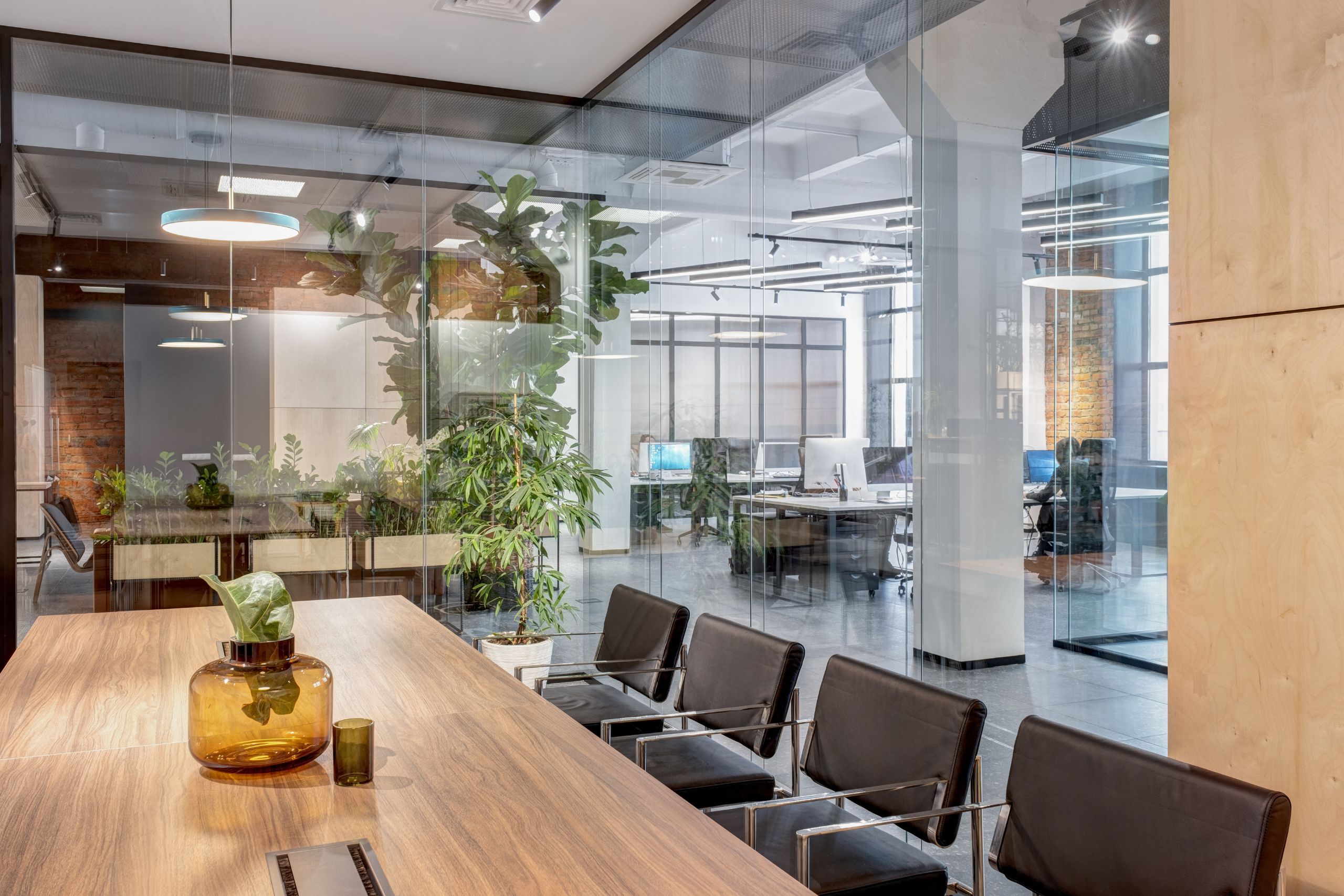
Almost every workplace project begins the same way. Someone on the leadership team visits a competitor’s office, sees a client’s new fit out, or scrolls through a set of glossy interior photos online, and comes back with a clear reference point in mind. That reference point quickly becomes the unofficial benchmark for the project that follows, shaping conversations about layout, finishes, and even the overall feel the business is aiming for. This instinct is entirely understandable. It is far easier to point at something tangible and say we want something like that than it is to articulate, from first principles, exactly what a business needs from its own space. The problem is that this instinct, while natural, tends to quietly steer workplace projects in the wrong direction, because it answers a question nobody actually asked. The right question was never what does a good office look like elsewhere. It was always what does this specific business need its office to do. Why Benchmarking Feels Like the Safe Choice Benchmarking against other offices feels safe because it offers a sense of external validation. If a well regarded company down the road has an open, collaborative layout with a striking reception area, it is tempting to assume that copying elements of that approach will produce a similarly successful outcome. This thinking treats office design as though it were a fashion trend, something that can be adopted wholesale because it worked well somewhere else. In reality, workplace design decisions that succeed in one business often succeed precisely because they were built around that specific business’s culture, working patterns, and objectives, none of which necessarily transfer to a different organisation simply because the finishes and layout look appealing in photographs. A business that borrows the aesthetic of another company’s office, without understanding the strategic reasoning that shaped it, risks ending up with a space that looks impressive but does not actually function well for the people using it day to day. The Difference Between Inspiration and Direction There is an important distinction between using other offices as a source of inspiration and using them as the actual direction for a project. Looking at other spaces can be genuinely useful for understanding what is technically possible, seeing how certain materials or layouts feel in practice, or sparking ideas that a business had not previously considered. This becomes a problem only when inspiration quietly turns into the actual brief for the project, with a business essentially recreating what it saw elsewhere rather than working backward from its own specific needs. A useful test for any business reviewing another office for ideas is to ask why a particular element works in that space, rather than simply whether it looks good. If the answer to that question cannot be clearly connected to something true about the visiting business’s own culture, working style, or client base, that element is probably inspiration rather than genuine direction, and should be treated accordingly rather than adopted uncritically into the brief. What Benchmarking Gets Wrong About Workplace Strategy The deeper issue with benchmarking is that it starts the workplace design process at entirely the wrong point. A properly run workplace strategy process begins by understanding how a specific business actually works, what its people need to do well, how the organisation is likely to change over the coming years, and what the office is genuinely meant to achieve for the business. Only once these questions have been answered does it make sense to move into layout and design decisions, and even then, those decisions should be justified by reference back to the strategy rather than to how another company’s office happened to look. Benchmarking skips this entire process and jumps straight to the visual outcome, effectively borrowing someone else’s answer to a question that was never actually asked about the business doing the borrowing. This is precisely why so many office projects that start from a benchmarking mindset end up requiring costly adjustments once the space is in use, because decisions were made based on how a space looked rather than on what it was actually meant to do. Every Business Is Solving a Different Problem Two businesses can occupy visually similar offices while facing entirely different underlying challenges, which is exactly why comparing spaces on appearance alone is such a limited way to make decisions. A professional services firm trying to project credibility and stability to cautious clients has a fundamentally different set of priorities to a fast growing technology company trying to signal energy and innovation to attract talent in a competitive market. A business built around deep, focused individual work has different space requirements to one built around constant cross functional collaboration between teams. Even two businesses operating in the same industry can have meaningfully different needs depending on their specific client base, their growth trajectory, or the way their particular teams prefer to work. Recognising that every business is genuinely solving a different problem is the first step toward moving away from generic benchmarking and toward a workplace strategy that is actually built around the business in question, rather than borrowed from someone else’s context. The Risk of Chasing Trends Instead of Fit Benchmarking is often closely linked to chasing broader design trends, since the offices businesses tend to reference are frequently the ones currently receiving the most attention for being visually striking or on trend. Trends are not inherently a problem, and some genuinely reflect meaningful shifts in how people want to work. The danger lies in adopting a trend simply because it is prominent, without asking whether it genuinely fits the business in question. An open plan, highly social layout might be exactly right for one organisation and entirely wrong for another whose work depends heavily on quiet, focused concentration. A striking, statement reception area might make sense for a business that regularly hosts high value client visits, and represent significant wasted spend for a business that rarely receives visitors at all. Chasing trend driven design

When Is the Right Time to Invest in a Workplace Upgrade?
Every business eventually faces the same quiet, nagging question. The office still technically works, employees are still getting their jobs done, and there is no single crisis forcing an immediate decision. Yet something feels slightly off. The space no longer quite matches the business it once suited, and leadership finds itself wondering whether now is genuinely the right time to invest in an upgrade, or whether the current setup can reasonably be stretched for another year or two. This is one of the more difficult business decisions to time correctly, precisely because there is rarely a single obvious trigger forcing the issue. Businesses that wait for an unmistakable crisis, a lease expiry, a visible capacity problem, or a client complaint about the state of the office, often end up making the decision reactively, under time pressure, rather than proactively, on their own terms. Understanding the actual signals that indicate the right time for a workplace upgrade allows a business to make this decision strategically, well before it becomes urgent. Why This Decision Is Easy to Postpone A workplace upgrade competes for budget and attention against a long list of other business priorities, and unlike many of those priorities, a slightly outdated or inefficient office rarely produces an immediate, visible cost. There is no single line item that clearly shows the business is losing money because of an ageing workplace, which makes it easy to postpone this kind of investment in favour of initiatives with more obvious, measurable returns. This is precisely why so many businesses end up upgrading reactively rather than proactively, waiting until the cost of doing nothing becomes impossible to ignore, such as a lease renewal forcing the issue, a serious capacity constraint, or a growing sense that the office is actively working against the business rather than supporting it. The businesses that get the timing right are the ones that learn to recognise the earlier, quieter signals, well before the decision is forced on them by circumstance. Signal One: The Office No Longer Reflects the Business One of the clearest early signals is a growing gap between how the business presents itself externally and how its physical space actually looks and functions. A business that has repositioned itself, grown its service offering, or matured considerably since its office was last designed often finds that clients, partners, and prospective employees walk into a space that tells an outdated story about the company. This mismatch matters more than it might seem, since the physical office is frequently the first tangible impression a visitor forms of the business, regardless of how strong the brand messaging is elsewhere. When leadership starts to feel a quiet sense of embarrassment or disconnect between the business’s current identity and its physical space, this is usually a meaningful signal that an upgrade is worth considering, even in the absence of any hard operational problem. Signal Two: Recruitment and Retention Are Being Affected The physical workplace has become a genuine factor in how candidates evaluate a potential employer, particularly as hybrid working has given employees more choice over where and how they work. A dated, uninspiring, or poorly functioning office can quietly work against a business during recruitment, even when the role itself and the company culture are genuinely strong. This effect is often difficult to measure directly, since candidates rarely state outright that the office was a deciding factor in turning down an offer, but businesses that survey new hires or exiting employees sometimes uncover this pattern clearly once they ask the right questions. Similarly, retention can be affected over time if existing employees increasingly feel that coming into the office offers little advantage over working from home, particularly if the space feels cramped, tired, or poorly suited to how the team actually works day to day. When recruitment or retention challenges start to surface, even subtly, the physical workplace is worth examining honestly as a potential contributing factor. Signal Three: The Business Has Genuinely Changed A workplace designed for a business at one stage of its growth frequently stops serving that business well once meaningful change has occurred, even if headcount has not grown dramatically. A business that has shifted toward more collaborative, cross functional ways of working may find its old, cellular office layout actively works against how teams now need to operate. A business that has adopted hybrid working more seriously may discover its office was designed entirely around full time daily attendance and no longer reflects genuine usage patterns. A business that has grown its client facing activity may find its original office, designed primarily for internal work, does not adequately support the volume of client meetings and presentations it now regularly hosts. In each of these cases, the trigger for an upgrade is not a single dramatic event but a gradual accumulation of change that has quietly outpaced the original design of the space. Signal Four: Maintenance and Running Costs Are Increasing Ageing office infrastructure tends to become more expensive to maintain over time, and this rising cost is often a more reliable, quantifiable signal than some of the softer indicators discussed above. Increasing spend on repairs, outdated mechanical and electrical systems that are becoming harder and more expensive to service, or inefficient lighting and climate control driving up utility costs are all practical, measurable signs that the underlying infrastructure of a workplace is reaching the point where ongoing patching is no longer the most cost effective approach. When maintenance costs begin trending upward year over year, it is worth comparing the anticipated future cost of continuing this pattern against the cost of a proper upgrade, since in many cases, a well planned investment proves more cost effective over a reasonable time horizon than an accumulating series of reactive repairs. Signal Five: A Natural Business Milestone Is Approaching Certain business milestones create a natural, lower disruption opportunity to invest in a workplace upgrade, and businesses that plan ahead for these moments are often able to time their investment more

Should Every Employee Have Their Own Desk?
For most of the history of the modern office, the answer to this question was never really in doubt. Every employee had a desk, that desk was theirs, and it stayed that way for as long as they worked at the company. This assumption shaped how offices were designed, how leases were sized, and how businesses budgeted for growth. Today, that assumption is being questioned by almost every business that has gone through the shift toward hybrid working, and for good reason. With a meaningful proportion of employees working from home for part of the week, many offices are now paying rent, power, and maintenance costs on desks that sit empty more often than they are used. The question of whether every employee genuinely needs their own permanently assigned desk is no longer a fringe idea raised by cost cutting facilities teams. It has become one of the most practical and financially significant questions a growing or changing business can ask about its workplace. Why This Question Has Become So Relevant A few years ago, this would have been an unusual question to ask seriously. Assigned desking was simply how offices worked, and challenging it felt more like a workplace culture experiment than a genuine business decision. The shift toward hybrid working has changed this completely. Many businesses now have employees in the office on a rotating basis rather than every single day, which means the traditional one desk per employee model results in a significant amount of unused capacity on any given day. This is not a hypothetical inefficiency. It represents real, ongoing cost, since office space is paid for regardless of whether a desk is occupied, and a business carrying more assigned desks than it typically needs on a busy day is effectively paying rent on space nobody is using most of the time. As businesses have become more focused on getting genuine value from their real estate spend, this question has moved from an interesting theoretical debate to a practical, financially material decision that directly affects the bottom line. The Case for Assigned Desks Before dismissing assigned desking entirely, it is worth being fair to the genuine benefits it offers, since these are real and matter to many employees and businesses. A permanently assigned desk gives employees a sense of ownership and stability, a small but meaningful piece of personal territory within the office where they can keep personal items, set up their equipment exactly as they like it, and return to a familiar, predictable environment each day. For roles that require specialised equipment, multiple monitors, specific ergonomic setups, or reference materials that are impractical to pack away daily, a fixed desk avoids the friction and lost time that comes with setting up and breaking down a workstation every single day. Assigned desking can also support a stronger sense of team identity, since employees know exactly where their colleagues sit, which can make spontaneous conversation and quick questions easier than in a fully unassigned environment where a colleague’s location changes daily. These benefits are genuine, and businesses considering a move away from assigned desking should weigh them honestly rather than assuming flexibility is automatically the superior choice in every situation. The Case Against Assigned Desks Set against these benefits, the case against universal assigned desking has become considerably stronger as hybrid working has taken hold. The most obvious argument is cost. A business paying for a fixed desk per employee, when a significant proportion of employees are only in the office two or three days a week, is carrying real estate capacity it does not consistently need, representing an ongoing, avoidable expense. Beyond cost, assigned desking can also work against the kind of spontaneous collaboration many businesses are actively trying to encourage as a reason for coming into the office at all. When employees are fixed to the same desk regardless of what they are working on that day, opportunities for incidental interaction with different colleagues or teams are naturally limited. There is also a practical reality that assigned desks are frequently left visibly empty on any given day, which can create a subtly discouraging atmosphere, making an office feel underused and quiet even when overall attendance numbers are reasonably healthy. For businesses trying to build energy and a sense of activity in the office, rows of empty, personally claimed desks can work directly against that goal. What the Data Usually Shows Businesses that have reviewed their actual desk usage data, rather than relying on assumptions about how full the office is, are often surprised by the gap between perceived and actual occupancy. It is common for a business to believe its office is close to capacity, based on how busy it feels on the days most people happen to be in, while data reveals that average daily occupancy across the full working week is considerably lower once quieter days are factored in. This gap matters considerably when deciding on a desking strategy, since a business planning desk numbers around its busiest day will end up with significant spare capacity on quieter days, while a business planning purely around its quietest day risks not having enough desks when more people choose to come in at once. Proper occupancy data, gathered over a meaningful period rather than a single snapshot, gives a business a far more accurate picture of what desking ratio genuinely makes sense, rather than relying on gut feel about how busy the office seems to be. A Middle Ground Rather Than a Binary Choice The most effective answer to this question, for most businesses, is rarely a complete switch to either fully assigned or fully unassigned desking. A more practical approach involves a hybrid desking model, where some roles or teams retain assigned desks because their work genuinely requires it, while other roles move to a shared or hot desking arrangement supported by proper booking systems and enough desk capacity to comfortably accommodate typical daily attendance. This kind of blended approach allows a business
Where Should Collaborative Spaces Be Located?
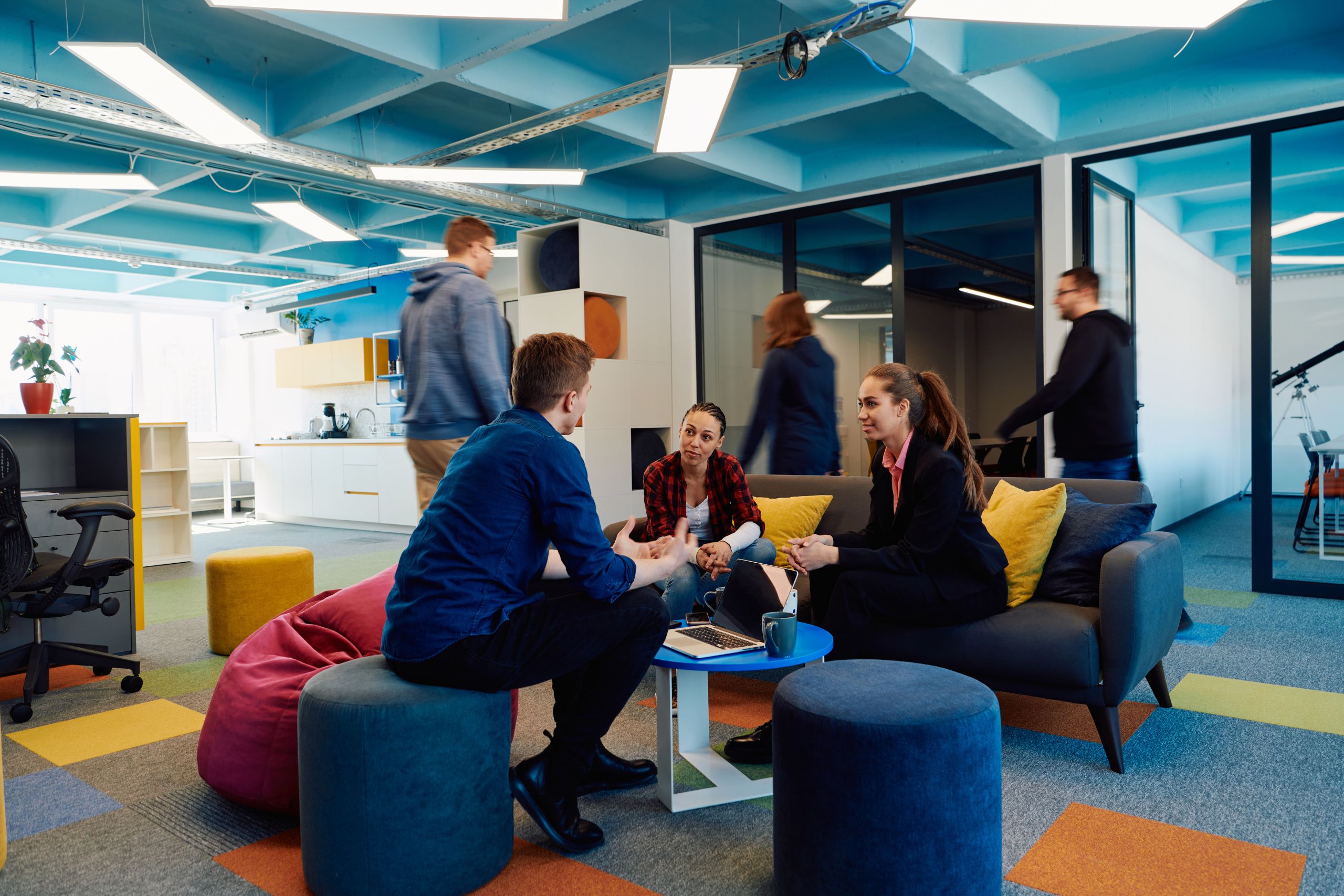
Collaborative spaces have become a standard feature of almost every modern office, and for good reason. As hybrid working has reshaped how often teams are physically together, the time employees do spend in the office increasingly needs to support genuine interaction, conversation, and shared problem solving rather than simply replicating the kind of quiet, individual work that can just as easily happen at home. Businesses have responded by adding breakout areas, informal lounges, huddle spaces, and open collaboration zones to their offices. What is far less often considered with any real intention is where these spaces should actually sit within the layout. A collaborative space with great furniture and thoughtful design can still fail entirely if it is positioned poorly, disrupting focused work nearby, creating awkward movement patterns, or simply sitting in a location nobody naturally gathers in. Getting the location right is arguably more important than getting the furniture or finishes right, since a well placed space with modest furniture will always outperform a beautifully designed space in the wrong part of the office. Why Location Matters More Than Most Businesses Realise It is tempting to think of collaborative space placement as a relatively minor detail compared to bigger decisions like overall headcount, desk ratios, or meeting room quantities. In practice, location is one of the most decisive factors in whether a collaborative space actually gets used the way it was intended. A breakout area tucked into an unused corner of the office, far from where people naturally walk or gather, will often sit empty regardless of how comfortable the furniture is, simply because it is not on anyone’s natural path through the day. Conversely, a collaborative space placed directly beside a high traffic route, such as the main path between the entrance and the kitchen, tends to see far higher organic use, since people encounter it constantly rather than needing to make a deliberate detour to reach it. This single factor, proximity to natural movement, often has more influence over whether a collaborative space succeeds than the quality of the furniture inside it. Balancing Collaboration with Focus One of the central tensions in placing collaborative space is balancing the energy and noise that healthy collaboration naturally generates against the need for quiet, focused work elsewhere in the office. A collaborative zone placed too close to desks used for concentrated, individual work can quickly become a source of ongoing frustration, with noise and movement disrupting people who are trying to focus nearby. This does not mean collaborative spaces need to be isolated or hidden away entirely, which would undermine their purpose just as effectively as poor placement in the other direction. Instead, it means thinking carefully about buffer zones, whether that is distance, a change in flooring or ceiling treatment that signals a shift in space type, or physical elements like planting or partial screening that absorb some sound without fully closing the space off. The goal is a layout where energetic collaboration and quiet focus can coexist without constantly competing with one another, which requires deliberate zoning rather than simply scattering collaborative furniture wherever space happens to be available. Space Planning Around Natural Gathering Points Every office, even before any collaborative furniture is introduced, tends to have natural gathering points, areas where people already congregate informally because of proximity to something functional, such as a kitchen, a printer, or a main entrance. Rather than fighting against these existing patterns, effective space planning works with them, positioning intentional collaborative space near these natural gathering points rather than in a separate, disconnected part of the office. This approach recognises that informal collaboration rarely happens because a business tells people to gather in a specific spot. It happens because people are already moving through an area for another reason and pause there because the environment invites it. A well planned office identifies these natural points early in the layout process, often through observation of how people currently move through the space or through occupancy data showing where informal activity already tends to cluster, and then reinforces those points with genuinely well designed collaborative furniture and layout, rather than imposing collaboration zones in locations that ignore how people actually move. Furniture Planning for Collaborative Success Once location has been properly considered, furniture planning determines whether a collaborative space actually functions well once people arrive. Furniture in these areas needs to strike a careful balance between comfort and practicality, since spaces that are too soft or lounge like can unintentionally signal a purely social function, discouraging their use for genuine work discussions, while furniture that is too formal can make a space feel just as rigid and uninviting as a standard meeting room. Modular, easily reconfigurable furniture tends to perform particularly well in collaborative zones, since it allows the space to flex between a quick two person conversation and a slightly larger informal gathering without requiring a dedicated room sized for the largest possible group. Height variation also plays a meaningful role, with a mix of standing height surfaces, lower lounge style seating, and standard table height options giving people genuine choice depending on the nature of the conversation and how long they expect it to last. Power access is frequently overlooked in collaborative furniture planning, yet it is essential, since collaborative work today almost always involves laptops, and a space without convenient charging access will quickly be abandoned in favour of a desk, regardless of how well the space is otherwise designed. Movement and Circulation Around Collaborative Zones Movement patterns around a collaborative space deserve just as much attention as the space itself, since poor circulation can undermine even a well located, well furnished zone. A collaborative area that creates a bottleneck in a key walkway, forcing people to squeeze past ongoing conversations to reach their desk or a meeting room, quickly becomes a source of friction rather than a genuine asset to the office. Equally, a collaborative space positioned awkwardly off a corridor, without a clear, natural point of entry,