
On any weekday morning in Johannesburg, you will find people working in cafes. Laptops open, headphones on, a flat white going cold beside a half finished email. Some are freelancers and some are between meetings, but a surprising number have a perfectly good desk waiting for them in an office they are paying for, a short drive away. They have simply decided that, for this particular task, the cafe is the better place to be.
That decision deserves more attention than it usually gets. The office used to compete with other offices. Today it competes with kitchens, home studios, co working lounges and the corner cafe, and in many cases it is losing. The reasons are rarely about price or convenience. They are about how the places make people feel, and that is something workplace design can influence far more than most businesses realise.
Why People Choose the Cafe
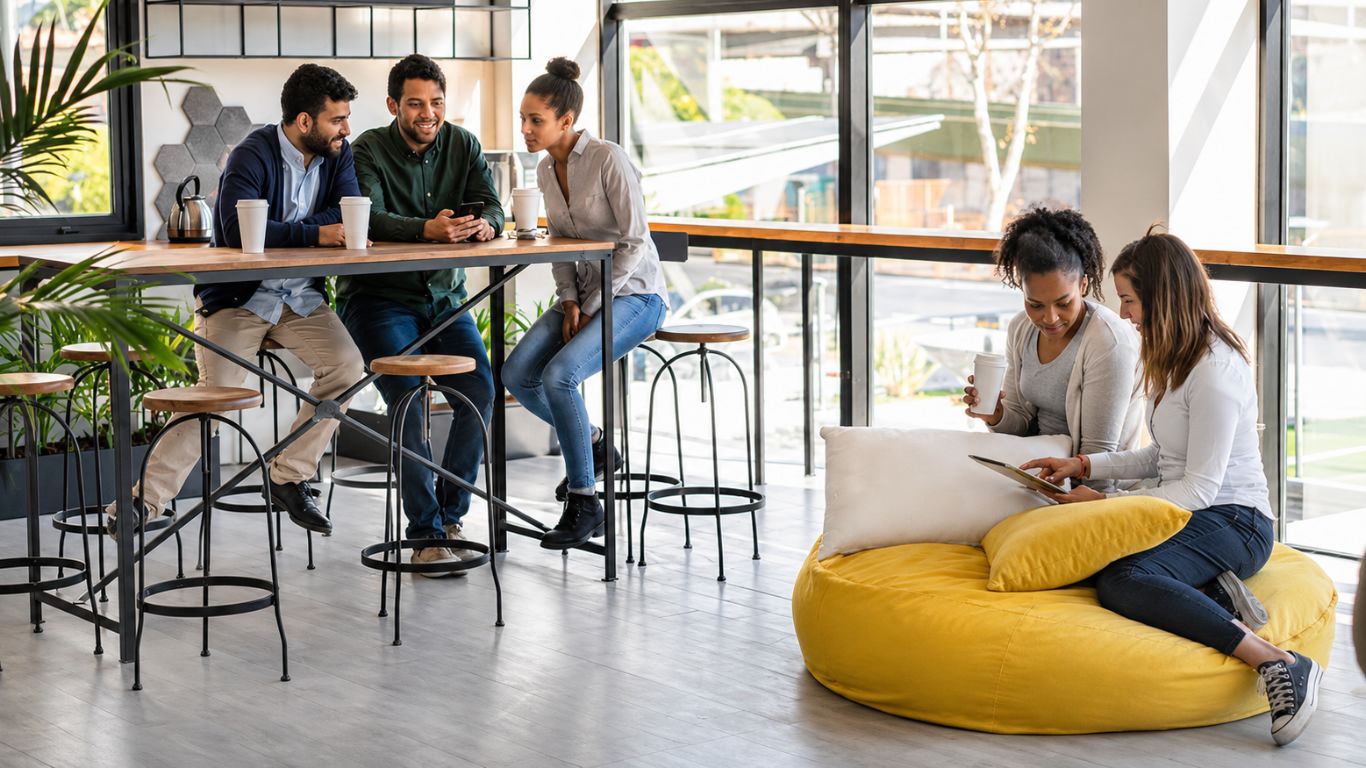
It helps to be specific about what a good cafe actually offers, because the appeal is more deliberate than it looks. The first thing is choice. A cafe gives people a range of places to sit, from a high counter by the window to a quiet corner table to a sofa, and the person decides where they want to be based on what they are about to do. Most offices offer one kind of seat, which is the desk.
The second is atmosphere. Cafes are designed to feel good to be in, with warm and layered lighting, natural materials, a gentle background hum and a sense that something pleasant is happening around you. The sound is a good example. It is not silent, which can feel oppressive, and it is not loud, which is distracting. It sits in a comfortable middle that many people find ideal for concentrating on a task.
The third is a feeling of autonomy. Nobody is watching, nobody knows how long you have been there, and you can leave when you choose. The fourth is occasion. Going to a cafe is a small ritual, with a drink to look forward to and a change of scene, and rituals make work feel less like a grind. Finally, there is hospitality. Someone greets you, someone makes your drink the way you like it, and you are treated as a guest and not as a headcount.
What the Office Often Gets Wrong
Set against that, a typical office can feel flat. The lighting is uniform and flat, the furniture is identical row after row, and the acoustics tend to swing between echoing quiet and unpleasant noise. Arriving is often an anticlimax, with little sense that anyone is expecting you. The coffee, in many places, is an afterthought.
None of this is the result of bad intent. It is the legacy of designing offices around efficiency, which meant uniformity and density. As we argued in why the open office is dead, the model that put rows of identical desks on a single floor has been quietly failing for years, and the rise of the cafe as a workplace is one of the clearest signs of it. When people can choose where to work, they gravitate toward spaces that were designed with human experience in mind.
What Hospitality and Retail Designers Already Know
The people who design cafes, restaurants and shops have spent decades studying how environment affects behaviour. They think carefully about the journey from the door to the seat, about how long people will stay and why, about light at different times of day, and about the textures people touch. They know that a space is judged in the first few seconds, and that comfort, interest and a sense of welcome are what make people linger.
This is expertise we use every day. Our work on shop fitting is built around the idea that a space should draw people in and make them want to stay, and the same principles apply inside an office. A workplace that people choose to attend is one that has been designed with the same attention to experience as a good retail or hospitality environment, while still serving the practical demands of work.
What the Office Can Borrow
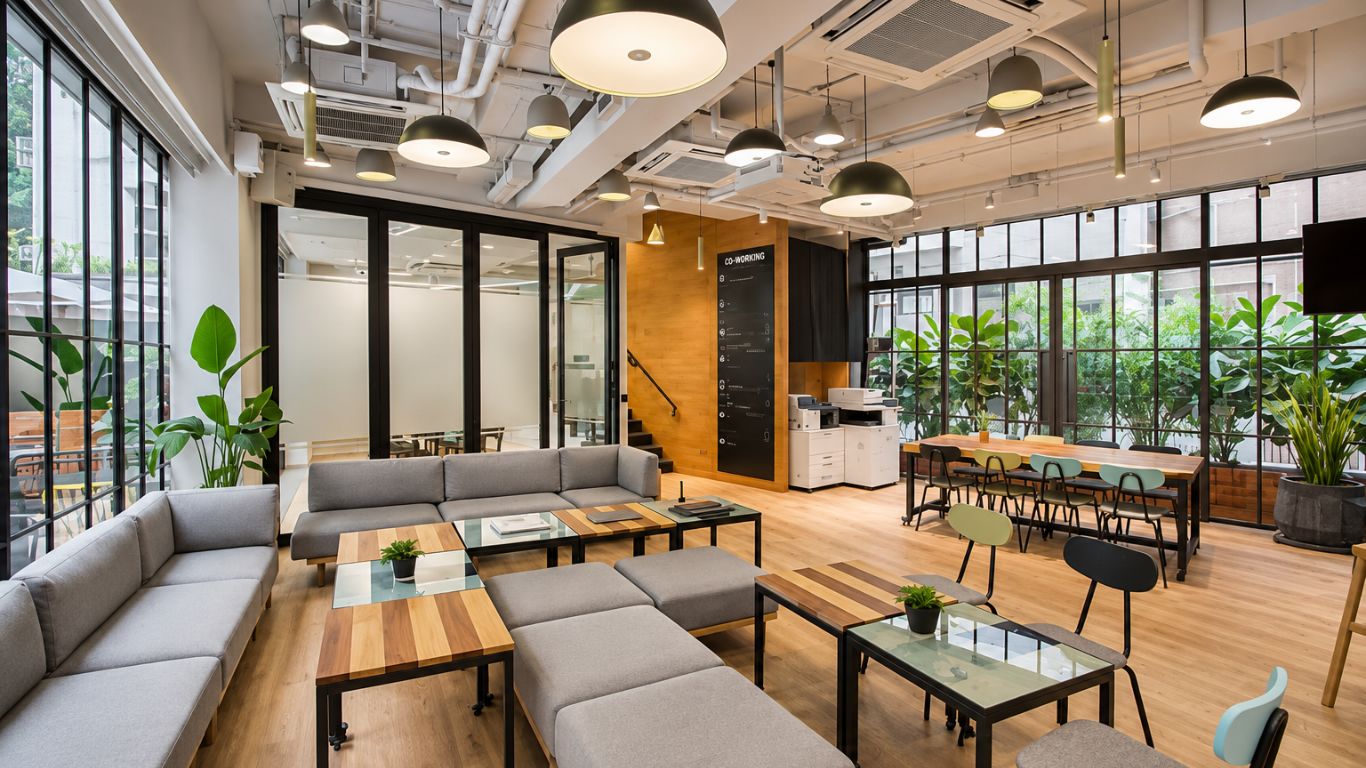
The goal is not to turn the office into a cafe, but to borrow the qualities that make cafes appealing. Start with arrival. A considered entrance, a welcoming reception and a clear sense of where to go shape the whole day, which is why reception design carries so much weight in how a business is perceived. If the first thirty seconds feel pleasant, the rest of the day starts on better footing.
Next, offer a genuine variety of places to work. A mix of focused desks, soft seating, high tables, small booths and larger communal tables lets people match the setting to the task, just as they do when they choose a cafe table. Layered lighting does a great deal of the work here. Warm, adjustable light at human scale feels very different from a ceiling of uniform glare, and our thinking on the role of lighting in commercial interiors explains why it affects mood and concentration far more than most people expect.
Sound deserves equal attention. Soft finishes, acoustic panels and thoughtful zoning create the comfortable background hum that cafes achieve by accident, without the sharp noise of an open floor. We cover the detail in why acoustic design matters in modern offices. And finally, never underestimate the coffee point. A well designed kitchen or coffee area, with good equipment, comfortable seating and a reason to linger, becomes the social centre of the office, and often the most used space in the building.
What Not to Copy
It is just as important to be clear about what the cafe gets wrong as a workplace. Cafe seating is rarely comfortable for a full day, and cafe tables are not designed for screens and long periods of typing. Power is limited, privacy is minimal, and confidential conversations are out of the question. People use cafes for short bursts of work, and then they leave.
An office has to support eight hours of productive work, the handling of sensitive information and the need for teams to gather and collaborate, so copying a cafe too literally would be a mistake. The aim is a workplace that feels as good as the cafe and works far better, combining the warmth and choice people love with proper ergonomics, power, acoustics and privacy.
Why This Matters for Retention and Attendance
There is a practical business reason to care about this. If the office feels no better than working somewhere else, people will quite reasonably work elsewhere, and the businesses most at risk are the ones with the strongest performers, who have the most choice. We explored this in is your office quietly pushing your best people toward remote work, and the cafe effect is part of the same story. If a person can do their best work somewhere that feels better than the office, it is the office that needs to change.
Attendance is also tied to the value people place on being together. When the office offers a reason to come in, such as a great place to meet a colleague, a space that makes focused work easier or simply a better environment than the alternatives, people come willingly. When it does not, the business ends up mandating attendance, which tends to produce resentment and not engagement.
How to Tell Whether Your Office Is Winning
A useful test is to ask whether people choose the office or merely attend it. Look at which spaces are used when people have a free choice, and which are consistently avoided. Notice where people go when they need to concentrate, and whether they stay in the building. If staff are regularly leaving to work from cafes, that is valuable information, and the right response is curiosity and not irritation. The process outlined in how to know if your office is actually working is a good place to start, and a considered office design can then address what the evidence shows
Frequently Asked Questions
Why do people prefer working in coffee shops? Cafes offer choice of seating, comfortable lighting and ambient sound, a sense of autonomy and a small ritual that makes work feel less routine. Many offices offer a single type of seat in uniform surroundings, which makes the contrast stark.
Can an office feel more like a cafe without losing productivity? Yes. Borrowing the warmth, variety and atmosphere of hospitality design, while keeping proper ergonomics, power, acoustics and privacy, can make an office both more appealing and more productive.
What hospitality features work well in a workplace? Welcoming arrival spaces, varied seating, layered warm lighting, soft acoustic treatment and a well designed coffee or kitchen area are among the most effective features to adopt. Each one improves how the space feels without compromising the practical demands of a working day.
Is it a problem if my staff work from cafes? It is a signal worth investigating. If people leave the building to do focused work, it often points to a gap in what the office provides, such as quiet space, comfort or atmosphere, that can be addressed through better design.
Give People a Reason
The office is no longer the default. It is one option among many, and it has to earn its place by being genuinely better for the work people want to do there. The businesses that understand this are designing spaces that feel as good as the best places in the city while delivering everything a workplace needs.
If you would like your office to be somewhere people choose to be, contact Tridyum to explore how hospitality inspired design can work for your business.