
Workplace design is no longer defined by aesthetics alone.
It is defined by who it includes.
Universal design is often misunderstood as a specialist requirement or a regulatory obligation. In reality, it is a strategic business decision. Accessible environments support productivity, improve workflow efficiency and strengthen organisational culture. Inclusivity is not a secondary objective. It is a measurable performance indicator.
Forward thinking organisations recognise that accessibility directly influences employee experience, talent retention and operational continuity. Universal design is therefore not about compliance alone. It is about performance.
What Universal Design Really Means
Universal design refers to environments that are usable by as many people as possible without the need for adaptation. It does not single out specific groups. It anticipates diversity from the outset.
The principles align closely with international accessibility frameworks such as those outlined by the United Nations Convention on the Rights of Persons with Disabilities and standards referenced in the Americans with Disabilities Act. While South African building regulations differ in structure, the underlying objectives are consistent. Workplaces must be safe, navigable and usable by people with varying physical, sensory and cognitive abilities.
Universal design is not limited to wheelchair access. It encompasses circulation planning, lighting, acoustics, signage clarity, ergonomic flexibility and intuitive spatial layout.
When applied correctly, it improves usability for everyone.
Inclusivity as a Business KPI
Organisations increasingly measure performance beyond revenue metrics. Culture, retention and employee wellbeing now form part of executive reporting.
Accessibility plays a direct role in these outcomes.
An inclusive workplace signals that diverse talent is valued. It reduces barriers to entry. It minimises disruption caused by preventable design constraints. It supports long term workforce sustainability.
Research from the World Health Organization estimates that over one billion people globally live with some form of disability. Many conditions are not visible. Others may develop over time due to injury or health changes. Designing environments that accommodate variation reduces operational risk and protects institutional knowledge.
Accessibility therefore supports continuity.
Compliance Is the Baseline, Not the Goal
Regulatory standards establish minimum requirements. They are necessary but insufficient when the objective is high performance.
Compliance may dictate ramp gradients, doorway widths and accessible restroom provision. Universal design goes further. It asks how people actually move through a space. It considers whether signage is legible under varied lighting conditions. It examines whether meeting rooms accommodate assistive technology without disruption.
Designing beyond minimum standards strengthens usability across the organisation.
Workplaces that rely solely on regulatory compliance often miss opportunities to enhance overall functionality.
Simple Changes With Significant Impact
Universal design does not always require structural overhaul. Small interventions can deliver measurable improvement.
Clear circulation routes reduce congestion and improve evacuation efficiency. Adjustable workstations support varying physical needs and encourage movement. Acoustic treatment enhances focus for individuals sensitive to background noise. Logical spatial planning simplifies navigation for visitors and staff alike.
Lighting strategy plays a further role. Balanced illumination reduces strain and improves visual clarity. Consistent floor finishes minimise trip risk while supporting aesthetic cohesion.
These measures benefit all users, not only those with specific requirements.
Workflow Efficiency and Spatial Clarity
Accessibility and workflow efficiency are closely linked.
When circulation is intuitive, productivity improves. When collaborative areas are easily accessible, engagement increases. When quiet zones are clearly defined, focus strengthens.
Poor spatial planning often results in unnecessary travel distances, bottlenecks or inaccessible resources. Over time, these inefficiencies compound. Universal design principles prioritise clarity, legibility and proportional layout.
The outcome is smoother operational flow.
Designing with accessibility in mind frequently resolves broader spatial challenges.
Universal Ergonomics as Standard Practice
Ergonomics is central to universal design. It acknowledges that individuals vary in height, mobility and working preference.
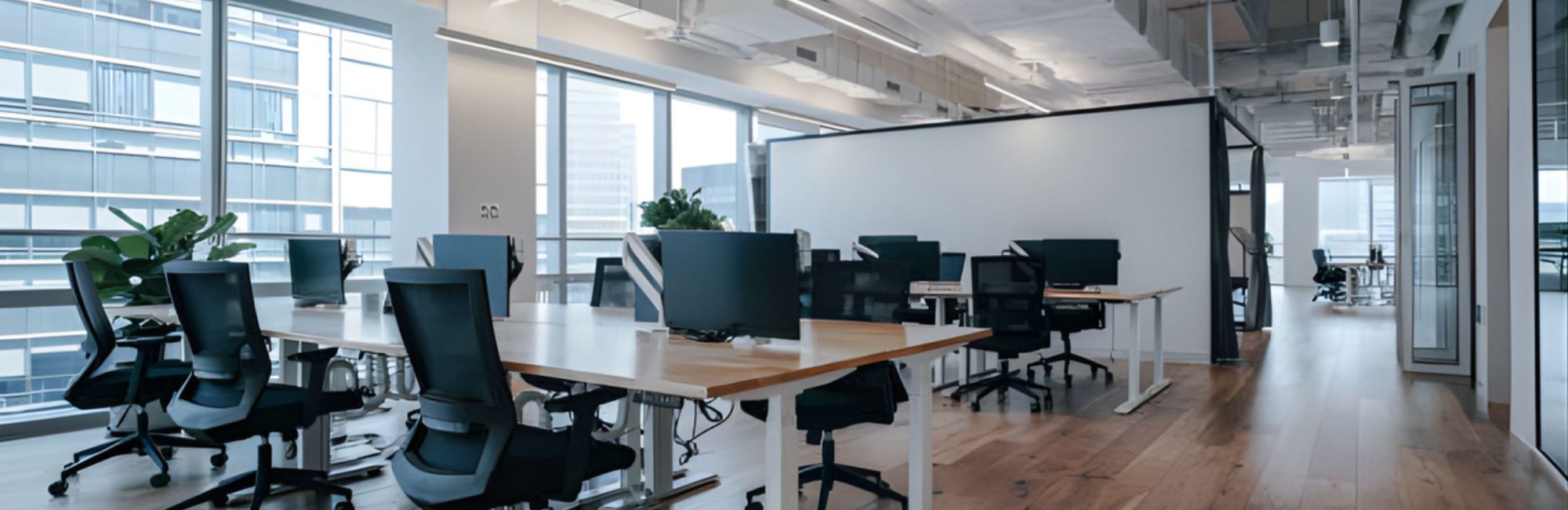
Height adjustable desks, supportive seating and adaptable meeting environments enable personal configuration. This flexibility reduces strain and supports long term physical wellbeing.
Musculoskeletal disorders remain one of the leading contributors to workplace discomfort globally, as reported by the World Health Organization. Integrating ergonomic adaptability from the outset reduces risk exposure and absenteeism.
Universal ergonomics does not benefit a minority. It benefits the majority.
Culture, Reputation and Talent Attraction
Inclusive workplaces communicate organisational values without formal statements. Physical environment reflects leadership intent.
Accessible design strengthens employer branding. It signals openness, respect and long term thinking. Prospective employees increasingly evaluate culture through lived experience rather than policy documentation.
Investors and partners also observe alignment between stated values and operational practice. Accessibility reinforces credibility.
A workplace that functions for everyone supports stronger reputation positioning.
Risk Management and Future Proofing
Design decisions made today influence usability for years to come.
Retrofitting accessibility features later is often more expensive and disruptive than integrating them at design stage. Future proofing through universal design reduces long term capital expenditure.
Demographic shifts further reinforce this need. Age diversity within workforces is increasing. Physical requirements evolve over time. Designing adaptable environments protects organisational resilience.
Strategic planning anticipates change rather than reacting to it.
Integrating Universal Design into Project Delivery
At Tridyum, accessibility considerations are embedded within early design development and spatial planning discussions. Circulation studies, workstation layouts and meeting configurations are reviewed through a usability lens before construction begins.
Supplier selection also reflects ergonomic and accessibility criteria. Furniture systems must support adaptability. Materials must ensure safety and durability.
Universal design is integrated within broader commercial objectives. It aligns inclusivity with performance outcomes.
Designing for Everyone Strengthens Business Performance
Universal design is not a specialised add on. It is foundational to how modern workplaces function.
Accessible environments improve workflow clarity. They reduce operational friction. They support physical wellbeing and cognitive comfort. They strengthen retention and protect institutional knowledge.
Organisations that prioritise inclusivity within spatial planning demonstrate long term thinking. They align environment with culture. They future proof capital investment. They reduce the cost and disruption associated with retrofitting compliance later.
Designing for accessibility does not dilute commercial performance. It enhances it.
Workplaces that function for everyone operate more efficiently, more sustainably and with greater resilience.