

When a business signs an office lease, the attention goes to the numbers that are easy to see. The monthly rental, the escalation percentage, the term, the parking bays and the deposit. These are the figures discussed in the meeting, compared against other buildings and approved by the finance team. Somewhere near the back of the document sits a clause that tends to be skimmed, filed and forgotten, and it can end up costing more than almost anything else in the agreement.
That clause deals with what the tenant must do to the premises before handing them back. It is commonly called reinstatement, and for many businesses in Johannesburg and across Gauteng, it is the cost that arrives years later, at the worst possible moment, with a deadline attached. Understanding it before signing, and planning for it well before the lease ends, is one of the simplest ways to protect a business from an expensive surprise.
What Reinstatement Actually Means
In plain terms, reinstatement means returning the space to the condition set out in the lease when the tenancy ends. The details vary from landlord to landlord, but a typical requirement is that anything the tenant has added or altered must be removed, and the space restored to something close to its original state. In practice, that can reach well beyond simply clearing out the furniture.
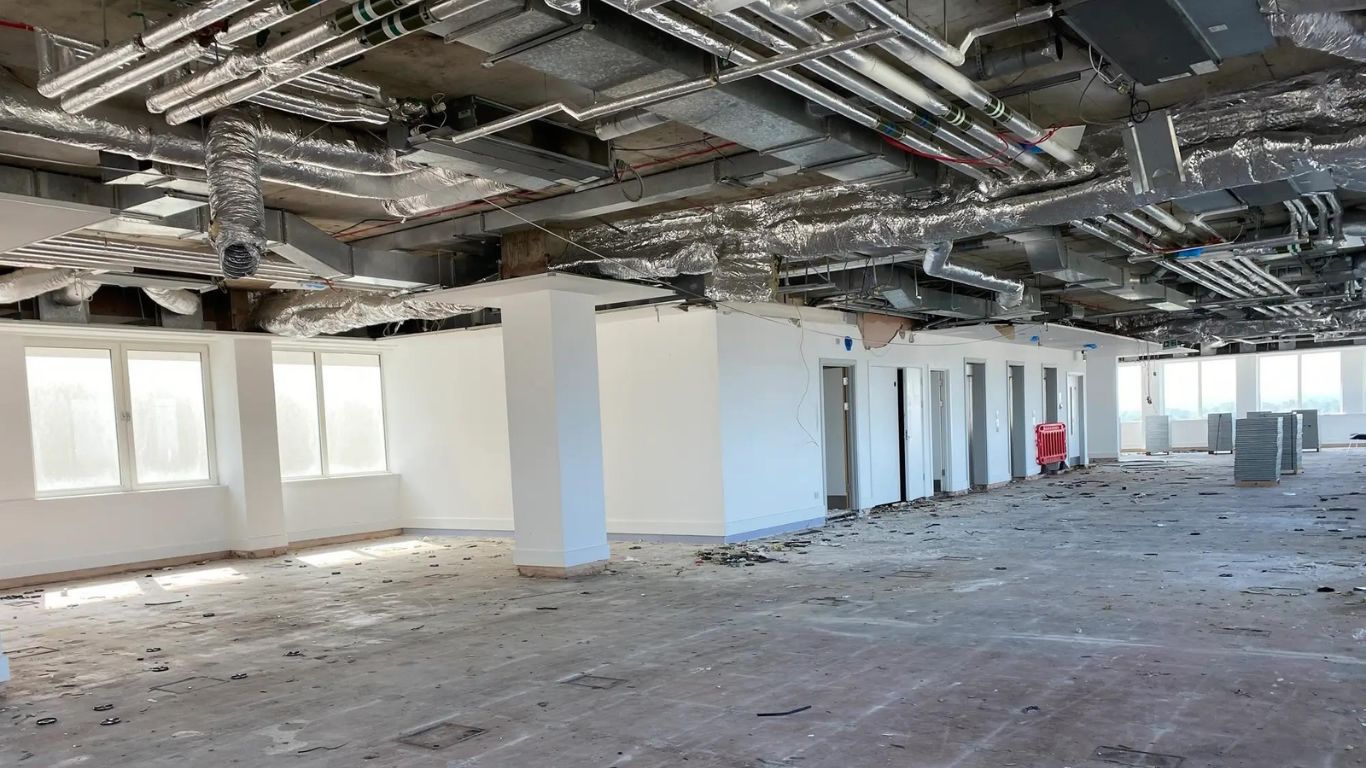
It often covers partitions and internal walls, ceilings and lighting that were changed, floor finishes, cabling and data points, signage and branding, and any special installations such as server rooms, additional air conditioning or kitchens. The longer a tenant has been in the space, the more alterations tend to have accumulated, many of them made years ago by people no longer with the business. When the lease ends, all of it becomes the tenant’s responsibility to deal with.
Why It Gets Overlooked
There are several reasons this clause slips through. The first is timing. Reinstatement is a cost that sits at the far end of a lease, often five or more years away, and the human tendency is to give future costs less weight than present ones. The finance team budgets for rent. Almost nobody budgets for the work required to leave.
The second reason is that the wording is often technical and varies in how specific it is. A clause that simply refers to returning the premises in good order, or in their original condition, can mean very different things depending on who is interpreting it and what the original condition actually was. The third is that the business that signed the lease is frequently not the same team that will be dealing with it at the end. By the time reinstatement becomes a live issue, the people who understood the lease have moved on and the documents are hard to find.
Where the Cost Really Comes From
Reinstatement costs are rarely driven by a single big item. They tend to accumulate from many smaller ones that were each reasonable when they were installed. Glass partitioning and private offices that improved the layout have to come out. Ceiling grids and lighting that were modified for a new layout need to be reinstated. Carpet or flooring laid over the original finish has to be lifted and the base restored, and walls that were painted in brand colours must be returned to a neutral finish.
Then there is the work behind the walls, which is where surprises tend to live. Redundant cabling, trunking and electrical alterations have to be dealt with safely and in line with the landlord’s requirements. Specialist items, such as raised floors for server rooms or additional ducting, can be both slow and costly to remove. Added together, these items can represent a significant sum, and because the work must be completed within a fixed window, there is little room to negotiate or shop around.
The Real Danger Is Starting Late
Cost is only half of the problem. The other half is time. Reinstatement is a construction project in its own right, with design, approvals, procurement and site work, and the landlord will typically want to inspect and sign off the result before releasing the tenant from the lease. When a business begins thinking about it in the final month, it is already behind.
Late starts create a predictable chain of consequences. Good contractors are booked, so the business pays a premium for availability or accepts whoever is free. Rushed work increases the risk of failing the landlord’s inspection, which means rework and delay. Delay can mean holding over in the space and paying rent for a period the business planned to be out, and in the worst cases it leads to deductions from the deposit or disputes about what was required. We see this pattern often, and it is covered in our guide to the costly mistakes businesses make when moving offices in Gauteng, where underestimating reinstatement features as one of the most common and most avoidable errors.
What to Do at the Start of a Lease
The best time to deal with reinstatement is before the lease is signed, when there is still room to negotiate. It is worth asking for the reinstatement requirements to be described clearly and specifically, rather than left to interpretation. Where possible, record the condition of the premises at the start of the tenancy, with photographs and a written description agreed by both parties, so that there is a reliable reference point at the end.
It is also worth discussing which alterations the landlord will accept as permanent, and which they will insist on being removed. Sometimes the landlord is happy to keep certain improvements, and sometimes an agreement can be reached to pay a sum in place of physical reinstatement. These are matters for negotiation, and for proper legal advice, because the wording of your own lease is what counts. This article is general guidance and not legal advice, so it is always worth having your attorney review the specific terms.

What to Do During the Lease
Throughout the tenancy, keep a simple record of every alteration, who approved it and what the landlord agreed at the time. Many problems at the end of a lease come from changes made informally, with no paper trail, which the landlord later insists must be reversed. A short log maintained by whoever manages the office can save a great deal of argument later.
It also helps to build the eventual cost into the way the business thinks about the space. Treating reinstatement as a known future liability, and setting something aside over the life of the lease, turns a shock into a line item. This is not about pessimism. It is about recognising that the cost of occupying a building includes the cost of leaving it.
What to Do as the End Approaches
Around twelve to eighteen months before the lease ends, the business should obtain the landlord’s reinstatement requirements in writing and have the scope assessed by someone independent of any contractor who might carry out the work. That assessment turns a vague obligation into a defined scope and a realistic budget, and it leaves enough time to plan properly. Our office reinstatement service is designed around exactly this stage, helping businesses understand what is required, agree it with the landlord and deliver it on time.
Because reinstatement often overlaps with a move, a renovation or a renewal, it is worth coordinating it with the rest of the plan. Good project management ensures the new space is ready when the old one must be handed back, and that the reinstatement work does not collide with the move. When these are treated as separate projects run by separate people, gaps appear, and gaps cost money.
How Reinstatement Shapes the Bigger Decision
Reinstatement is more than a housekeeping task, because it changes the economics of the decision a business faces at the end of a lease. If you are weighing up whether to move or stay, the cost of reinstating the current space is part of the comparison. Renewing can defer that cost, though it rarely removes it, while moving brings it forward and adds the expense of fitting out a new space. We look at this trade off in how to decide between an office move and an office redesign, and in when staying makes more sense than relocating.
Seeing the whole picture early prevents a business from comparing the cost of a new office with only half of the cost of leaving the old one. A decision that looks inexpensive on the monthly rental can look very different once reinstatement is added, and the reverse is sometimes true as well. Either way, the decision is better made with the real numbers in front of you.
Frequently Asked Questions
What is office reinstatement? Office reinstatement is the work a tenant must do to return leased premises to the condition required by the lease at the end of the tenancy. It commonly includes removing partitions, restoring ceilings and floors, and dealing with cabling and installed fixtures.
When should I start planning for reinstatement? Ideally from the start of the lease, by understanding the requirements and recording the condition of the space. In practical terms, you should obtain the landlord’s requirements and an independent scope of work around twelve to eighteen months before the lease ends.
Can reinstatement costs be negotiated? In some cases, yes. Landlords may accept certain improvements as permanent, or agree a payment in place of physical work. The outcome depends on your lease and the landlord, so it is worth seeking legal advice and raising it early.
What happens if reinstatement is not completed on time? The consequences can include holding over charges, deductions from the deposit and disputes with the landlord. Starting early and using an experienced contractor reduces the risk of failing the landlord’s inspection and having to repeat work.
Reading the Page Before It Reads You
Almost every business reads the rent clause carefully, and almost none give the reinstatement clause the same attention. Yet it is often the clause that determines how smoothly a lease ends, and how much it costs to leave. The businesses that handle it well are the ones that read it at the beginning, plan for it throughout and treat it as a project long before the final month.
If your lease is approaching its end, or you are about to sign a new one, contact Tridyum for a clear view of what reinstatement will require and what it is likely to cost.